Rep Swearingen is stuck on his bill, the Three Tier Systm
Rob Swearingen and the New Hemp Bill
Rep. Swearingen has had many chances to be a team player and instead of giving some love to his colleagues and a bill that could actually pass, he still is pitching his bill and is now being labeled the “The Wisco Mitch“. No doubt a word play influenced by the recent “federal hemp ban kingpin” Mitch McConnell and the word bitch.
Rep. Rob Swearingen, a Republican from Rhinelander, is the primary author and sponsor of AB 606 — a sweeping bill that would dramatically change how hemp-derived cannabinoid products are regulated in Wisconsin. As chair of the Assembly’s Committee on State Affairs, Swearingen effectively controls which bills receive hearings and advance. Under his leadership, AB 606 was sent to his committee, setting the stage for a fast-tracked process.
AB 606 would rename the state’s “Division of Alcohol Beverages” to the “Division of Intoxicating Products,” placing hemp-derived products (including THC/cannabinoid products) under the same regulatory umbrella as alcohol.
The bill would impose a “three-tier licensing system” similar to the alcohol distribution model: separate licenses and burdens for growers, processors, distributors, and retailers. This means costly permits, inspections, and taxes — including “occupational taxes” on hemp-derived cannabinoid products.
Opponents warn that this “over-regulation, not legalization” approach threatens small farms and businesses, could push out local operators in favor of large distributors or out-of-state companies, and may even force the closure of vertically integrated hemp farms.
The Broader Context: Upheaval & Alternative Legislation
The introduction of AB 606 comes amid a chaotic legislative session in 2025–26, where numerous hemp and hemp-derived regulation bills have been circulating. According to a recent overview, AB 606 is part of a sequence of four major bills affecting Wisconsin’s hemp industry — including proposals to ban intoxicating hemp products entirely.
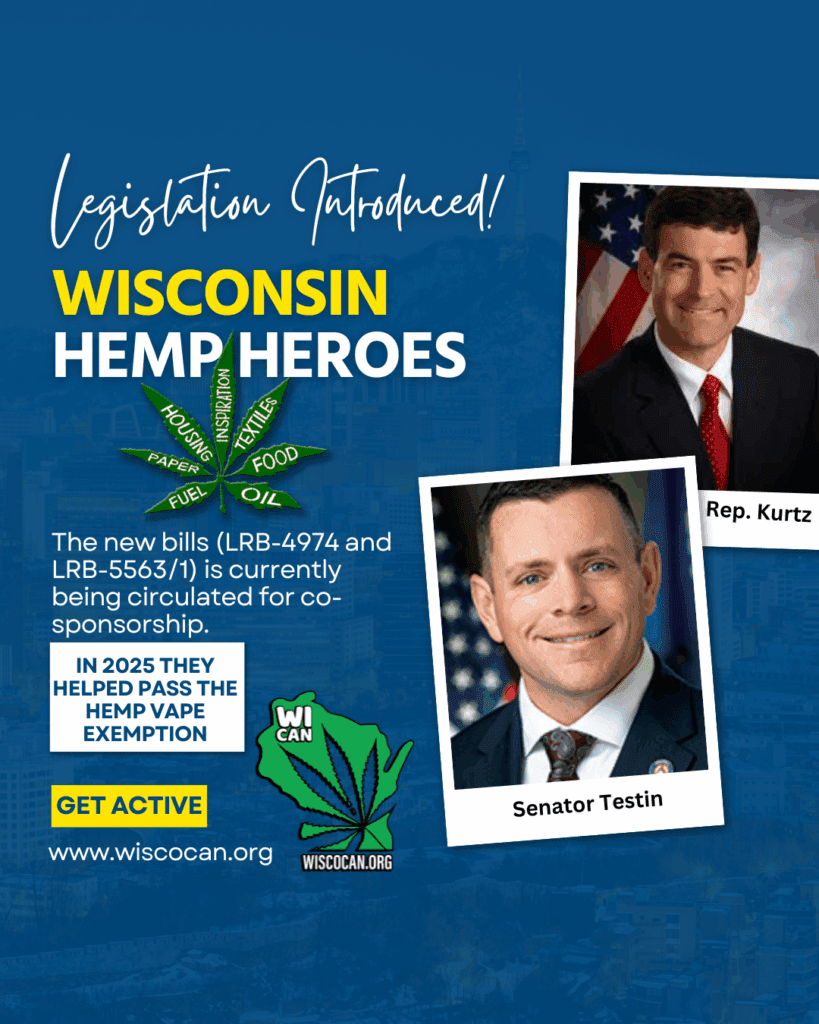
Notably, a competing proposal sponsored by Patrick Testin and Tony Kurtz is now circulating for co-sponsorship. That bill — the fourth in the sequence — is being described (by its proponents) as potentially more moderate, or at least as a political pivot away from outright bans or heavy-handed regulation.
Yet so far, Swearingen has not publicly endorsed this Testin/Kurtz proposal — the one that some in the industry view as the “best, most common-sense written bill” currently on the table.
This reluctance has sparked concern and frustration among hemp farmers, small business owners, and industry advocates. Many view Swearingen’s insistence on AB 606 — despite the availability of a seemingly more pragmatic alternative — as stubborn adherence to a flawed system that threatens Wisconsin’s hemp economy.
Swearingen’s History: From “Tavern League” to Hemp Regulator

To understand why Swearingen champions AB 606 — and why many distrust his motives — it helps to look at his background. Before joining the Assembly in 2012, Swearingen served as president of the Tavern League of Wisconsin (TLW), a powerful lobbying group representing bars, taverns, and alcohol-related businesses.
Many activists and writers now view that background as a potential conflict of interest: Here is a former alcohol-industry leader helping draft legislation that would regulate hemp products as though they were alcohol — thereby extending the influence of the alcohol distribution system to a very different industry.
Indeed, over the years, Swearingen has repeatedly blocked cannabis reform efforts. As chair of the Committee on State Affairs, he has killed multiple bills related to medical marijuana or adult-use legalization.
Even when public support in his district was strong — for example, a 2019 constituent survey showed 63% supported medical marijuana — Swearingen reportedly ignored those results and continued to oppose reform.
In a deeper sense, critics argue, this new hemp-regulation bill is not about consumer safety or sensible oversight — it’s about control. It looks like an attempt to fold a growing, independent hemp industry into the old alcohol regulatory regime — one whose vested interests historically have opposed marijuana or competing intoxicants.
What’s at Risk: Farmers, Small Business, Consumers
If AB 606 passes as written, the consequences could be severe for many in Wisconsin’s hemp ecosystem:
- Small and medium-sized hemp farms and processors may be unable to afford the licensing, fees, and regulatory burden — leading to closures or bankruptcies.
- Vertically integrated operations (grow, process, sell) — a common structure in the hemp industry — would effectively be outlawed, because alcohol-style three-tier laws prohibit combined manufacturing, distribution, and retail under one business.
- Consumers could lose access to hemp-derived cannabinoid products sold currently — or face significantly higher prices due to taxes and compliance costs shifting to the consumer.
- Wisconsin’s hemp heritage — once viewed as an emerging agricultural and economic opportunity — could be stunted or reversed just as it was gaining steam.
Many industry stakeholders and advocates criticize AB 606 as a “power grab” by alcohol-distribution interests rather than a genuine effort to regulate hemp responsibly.
Why Swearingen Still Pushes It — And Why His Colleagues Offered a Different Path
From Swearingen’s vantage point, folding hemp into the alcohol regulatory framework might seem like the simplest path to “bringing order” to a previously chaotic industry. Given his background, he may view a three-tier system as familiar territory.
But the reality — as many within the hemp industry point out — is that hemp-derived cannabinoid products and alcohol are fundamentally different. Hemp has agricultural roots; many products are tied to small farms, vertically integrated operations, and emerging businesses selling goods nationwide. Treating hemp like liquor ignores these structural differences and risks dismantling the progress made over the past years.
That’s why other lawmakers — like Testin and Kurtz — floated a different proposal. Their draft (the “fourth hemp bill”) is being circulated for co-sponsorship and is often described within industry circles as the more reasonable or “common-sense” approach for regulation, rather than prohibition or heavy-handed alcohol-style oversight.
So far, though, Swearingen has not backed, endorsed, or even publicly acknowledged that alternative. His continued support for AB 606 — despite the rising backlash from hemp farmers, small businesses, and reform advocates — has many questioning whose interests he’s truly protecting.
Conclusion: A Choice Between Control and Growth
The state of Wisconsin — and particularly its hemp community — now stands at a crossroads. On one side is AB 606, championed by Rob Swearingen: a proposal that would essentially subsume hemp under old alcohol-industry regulation, potentially crushing small growers, retailers, and a budding local economy. On the other side is a newer, alternative proposal from Testin and Kurtz that some view as a more honest, workable attempt at regulation — one that does not punish hemp simply for being hemp.
Whether Swearingen will pivot — or double down — remains to be seen. But given his past record of blocking cannabis reform, and his clear ties to the Tavern League and alcohol regulation interests, many remain deeply skeptical.
For Wisconsin’s hemp entrepreneurs and consumers, the stakes are high. The next few weeks and months could determine whether this industry survives — or is crushed under the weight of ill-fitting regulation, or even worse, made illegal again under the looming federal hemp ban. Please give a Facebook and Instagram follow to the Wisconsin Cannabis Activist Network (Instagram) and the Wisconsin Hemp Farmers and Manufacturing Association (Instagram) for up to date movements on the issue of hemp cannabis reform.