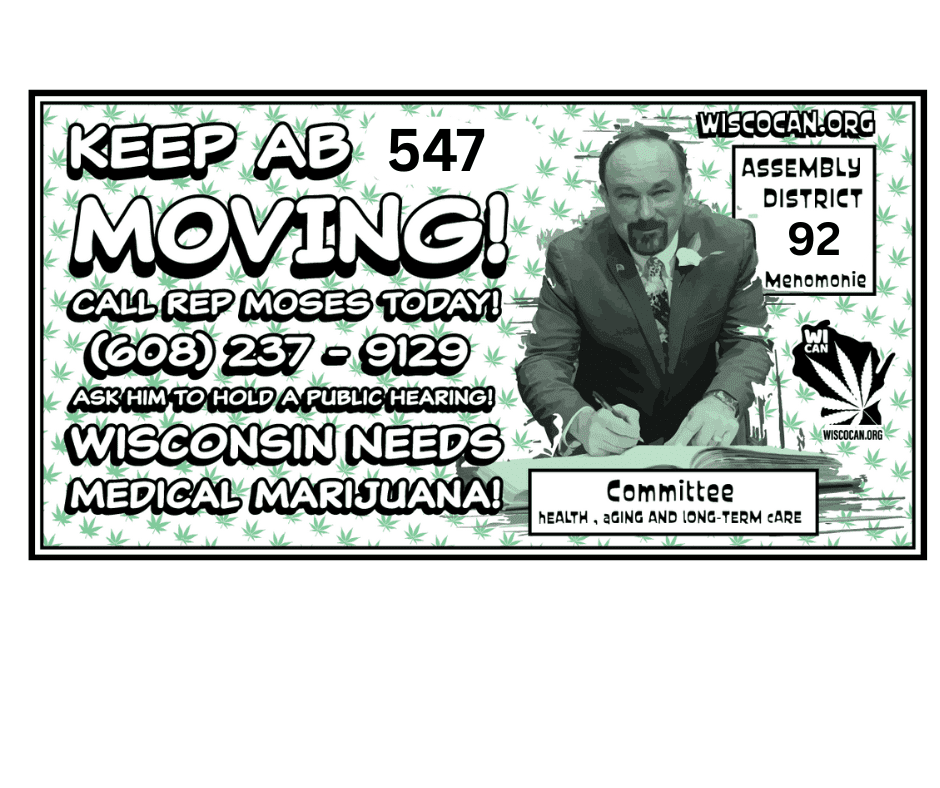
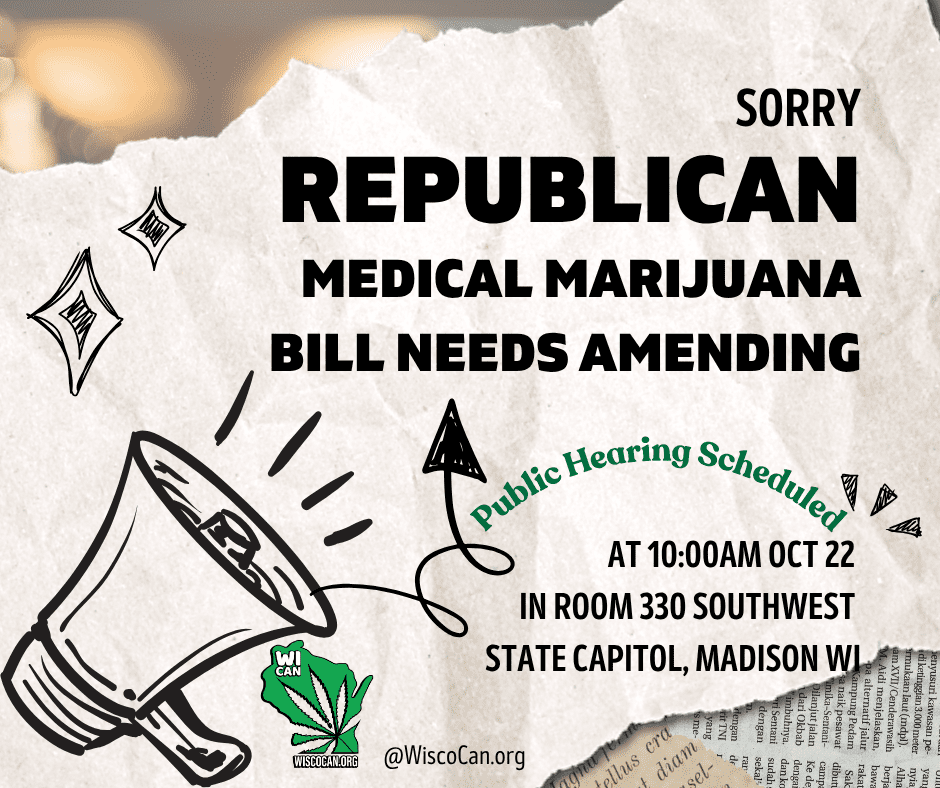
Will Rep. Clint Moses Actually Hold a Public Hearing on the GOP Medical Marijuana Bill?
In Wisconsin, legislative momentum often comes with caveats. For advocates of medical cannabis reform, the question is: Will Rep. Clint Moses (R-Menomonie) step up and convene a meaningful public hearing on the Republican medical-marijuana proposal — or will the process stall or be managed in a way that minimizes transparency and input?
Here’s a consultant’s breakdown of the politics, incentives, and likelihood of action.
1. Moses’ Role & Record
From previous coverage (“Who is Assembly Rep. Clint Moses”) we know a few relevant things:
- Moses is a chiropractor, small-business farmer, and former Eagle Scout in Menomonie.
- Early on, he expressed opposition to cannabis reform, but later said his medical practice exposed him to patients using cannabis successfully — and he evolved into publicly supporting medical use.
- His 2020 Candidate Questionnaire Answers on file, he supported the 2019-20 Assembly Bill 220 (adult use legalization) and received an Endorsement from NORML in the 2020 Election.
- Rep. Clint Moses did co-sponsor cannabis decriminalization legislation his first term in office during the 2021-22 session, but was absent from the medical cannabis legislation Republicans presented during the same session. As one of the only Republicans even giving a little inclination that they would support the adult use legalization bill authored by Senator Agard (D) it is unfortunate that Rep. Moses was absent from the adult use legislation.
- In the 2023-24 session he was listed as co-author of the Republican-framed medical cannabis bill (along with Speaker Robin Vos). However, in the current 2025-26 session he is not listed as an author or co-sponsor of the bill now advancing.
- Importantly: He serves as Chair of the Assembly Health, Aging & Long-Term Care Committee — the committee that would hold the Assembly hearing on the medical-cannabis bill.
That means: Moses has the role of gatekeeper. He has the formal power to schedule or withhold a hearing. And his earlier authorship gives him ownership of the issue — yet his absence from the new bill raises questions about his current commitment.
2. Legislative Landscape & Current Status
- The Senate version of the bill (e.g., Senate Bill 543 / Assembly Bill 547) was scheduled for a public hearing the same day it was introduced in the Senate.
- The Assembly version remains unscheduled for a hearing in Moses’ committee (as of the last publicly available update).
- Recent reporting suggests senators and advocates are urging Moses to step up: from one account, “We’re going to twist the arm of Rep. Moses … to provide a hearing.”
- Meanwhile, legislative calendar pressures (few remaining session days, competing priorities) are real.
In short: The Senate is moving the bill forward (or at least publicly scheduling hearings), while the Assembly is still waiting — and the waiting is within Moses’ control. The fact that Moses is not an author/co-sponsor of the new version, despite being chair, is a strategic red flag.
3. Moses’ Incentives & Constraints
Incentives for him to call a hearing:
- If he has further political aspirations, goals or will be seeking higher office, not holding a public hearing on medical marijuana two sessions in a row makes him look like a horrible person and a nothing more than a Vos minion. Being the sole person to blame for not advancing efforts would be a stain on his future political career.
- As committee chair and as a previous author, calling a hearing allows him to demonstrate leadership and give the reform effort legitimacy.
- With public polling showing strong support for medical cannabis in Wisconsin, Moses has an opportunity to align with constituent sentiment. On June 17th, 2025 I received an email from Rep. Clint Moses regarding the results of the 2025 Budget Survey that included a questions about cannabis reform. You can view the entire survey results in Rep. Moses Newsletter entitled “The Moses Message“. The results showed over 75% of Rep. Moses constituents surveyed supported medical cannabis.
- By framing the bill as safe, narrow (e.g., smokeless, tightly regulated) — as his prior comments suggested — he may protect himself from majority-caucus backlash while advancing reform.
Constraints / reasons he might delay or control the hearing:
- Despite reform momentum, the broader GOP caucus (and leadership aka Vos) remains cautious about adult-use legalization and “slippery slope” narratives; Moses may feel pressure to avoid full exposure or to avoid a hearing that opens the door too widely.
- The fact that he is not an author or sponsor of the 2025-26 version suggests his enthusiasm may have cooled or he wishes to avoid full ownership of a bill that might get messy.
- Moses might now want to be the one that gets between the pissing match between Vos (Assembly) and Felzkowski (Senate) on the the direction of the bill.
- Timing is critical: if he waits too long or schedules the hearing in a low-attendance slot, he may effectively kill substantive reform by default — even while technically holding a “hearing”.
- Hearing logistics: small stakeholder engagement, limited testimony, restrictive rules — these can turn a hearing into a perfunctory step rather than substantive deliberation.
4. Probability & Scenarios
Here’s how I see the odds and outcome scenarios (as of now):
Probability of any hearing before session end: 35%
Probability of a robust, open hearing with broad stakeholder input: 20%
Probability of no hearing or a token hearing that goes nowhere: 65%
Scenario A (Best case for advocates):
Moses schedules the hearing quickly (within next few weeks), opens up slots for patient testimony, allows amendments and deliberation, signals willingness to engage. That hearing becomes a genuine step toward passage.
Scenario B (Mid-range):
Hearing is scheduled but under restrictive conditions: limited time, few witnesses, mostly pro-bill testimony, minimal debate. Moses gets the “hearing done” headline, but substance is compromised. Advocates get a slot but less influence.
Scenario C (Worst case):
No hearing is scheduled in meaningful time. Moses delays citing “logistics” or “pending stakeholder feedback” or worse yet, doesn’t say shit about anything indicating Vos told him not to advance the bill. Bill languishes in committee. Reform momentum stalls until next session, and Moses avoids direct responsibility.
Using common sense and given his role and prior authorship, Scenario B seems most likely— a hearing will happen, but it may not deliver full stakeholder engagement or open deliberation. But unfortunately my gut tells me something different, that Moses is going to sit on it and do nothing.
5. Strategy for Reform Advocates
From a consultant’s vantage, here are recommended tactics for groups like The Wisconsin Cannabis Activist Network and other newly formed organizations pushing reform.
Push for transparency and accountability
- Publicly ask Moses’ office for the hearing schedule, list of invited witnesses, and committee rules. Make it visible.
- Use media (press releases, interviews) to highlight that Moses chairs the committee and yet the hearing is unscheduled — shift the narrative to “Why not yet?”
- Mobilize patient voices and clinician allies now — create a roster of willing speakers ready to testify at short notice.
Prepare for the hearing whether strong or weak
- Develop a “hearing toolkit” for constituents: talking points, sign-in instructions, what to expect, what questions to ask.
- Prepare for the possibility of limited slots or restrictive format: coordinate strong, concise testimony that fits any time slot-to-testifier ratio.
Read the signals
- If Moses schedules the hearing but imposes narrow rules, treat that as a cue: press for amendments, media coverage, follow-up.
- If hearing is delayed past a key calendar date, shift focus to next session strategy — use the delay as an advocacy opportunity rather than defeat.
Frame Moses’ ownership
- Emphasize: “Dr. Moses, you co-authored the prior version, you chair the committee. When will your hearing happen?”
- Use this framing in op-eds, social media posts, advocacy letters — turn the question away from “Will there be a hearing?” to “When and how will you hold it?”
6. My Verdict
In sum: I judge that Rep. Moses will not likely schedule a hearing (over 65% chance) even given his formal powers, past authorship, and the mounting reform pressure. However — the odds are significantly lower (under 20%) that the hearing, if it happens, will be genuinely open, robust, and stakeholder-driven. A more probable outcome if a hearing is actually held, would be with somewhat limited access, shaped by Moses’ caucus considerations and leadership sensitivities.
For advocates, the key takeaway: Treat the hearing as possible imminent, act quickly to influence it, but don’t count on it being ideal. Simultaneously build for the possibility that you’ll need to push into the next session — and hold Moses (and his committee) publicly accountable.